
Digital Upgrade at FTZ Government Service Center: Smart Queuing System Sets a New Benchmark for Public Services
Against the broader backdrop of deepening reforms to streamline administration, delegate power, improve regulation, and upgrade services, and of continuously optimizing the business environment, the Free Trade Zone Government Service Center—as the frontline of service for enterprises and the public—is accelerating its digital transformation. Recently, the smart queue management system has been fully upgraded and deployed in the Free Trade Zone government service hall. Through innovations such as “cloud-based appointment, intelligent queuing, and data interoperability,” it effectively reduces crowding, optimizes service processes, significantly enhances government service efficiency, and sets a smart benchmark for FTZ government services.
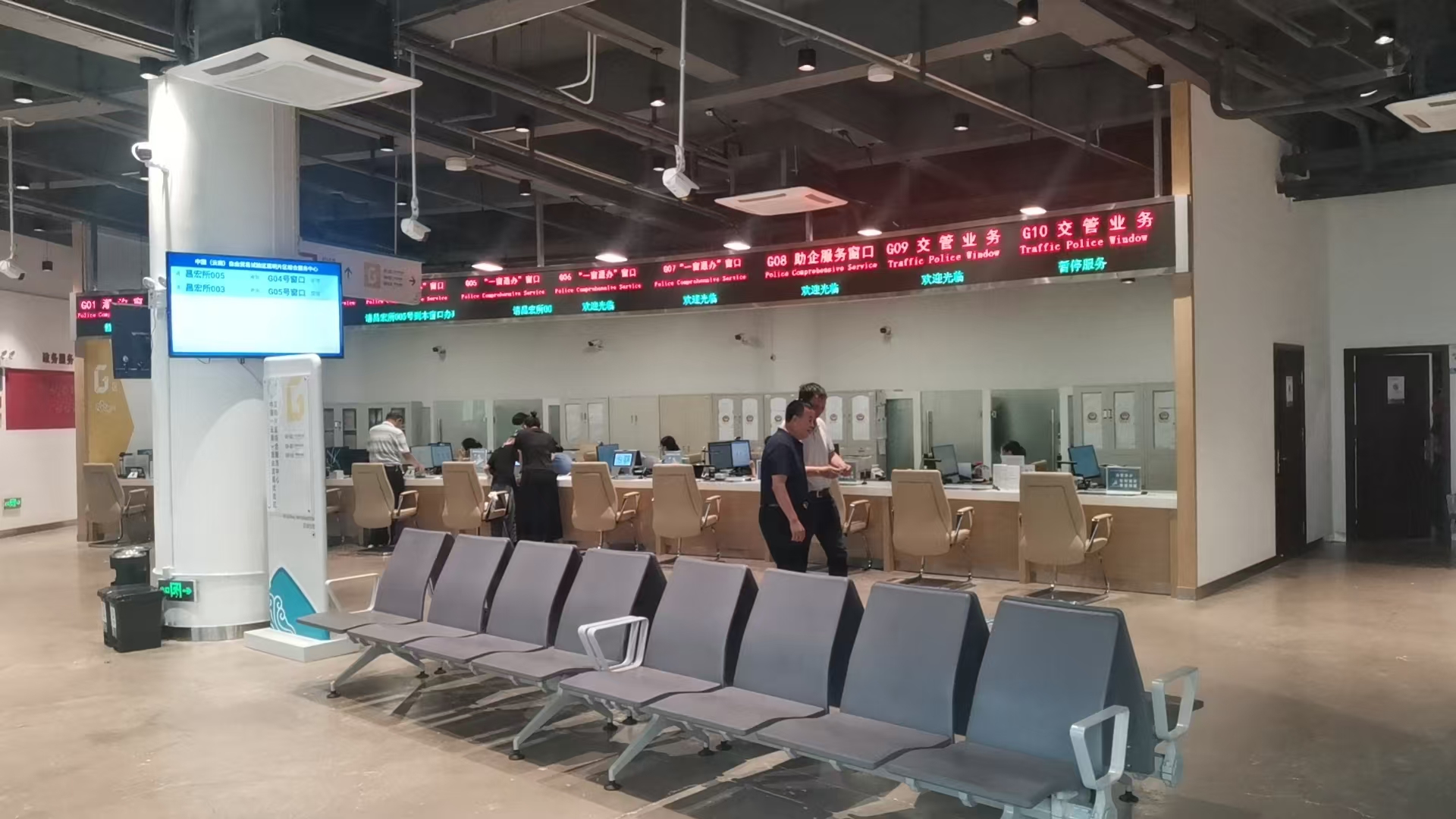
Deep Integration with LED Screens: No More Cumbersome Operations, Information Synchronized on a Single Screen
The queue management system is deeply integrated with the hall's counter LED screens, allowing staff to modify LED screen content directly within the queue management system without third-party software, completely eliminating the cumbersome traditional process of configuring each screen individually. The system also supports customizable multilingual display, fully accommodating the needs of foreign-related service scenarios in the FTZ, enabling real-time synchronization of queue information and flexible switching between Chinese and English, effectively improving the hall's guidance efficiency and international service level.
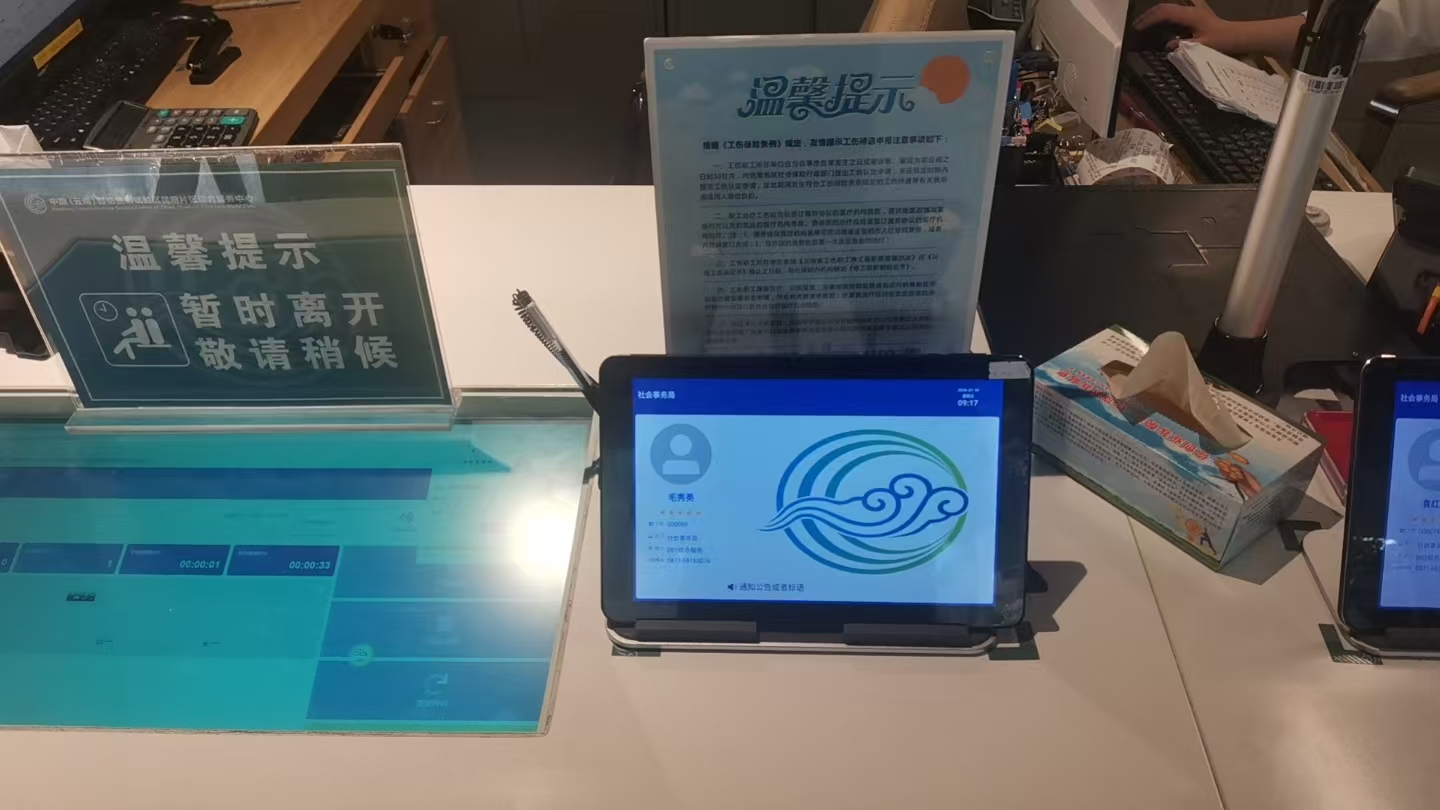
Integrated Evaluation Interaction: A Full-process Closed Loop for the Service Experience
The queue management system is deeply integrated with the evaluation interaction system. The evaluation terminal can display basic information and supports customized playback of images, text, and video materials. The full-process status linkage mechanism makes every step clear and controllable: under normal on-duty conditions, it displays basic information and customized content; when calling a number, it precisely shows the current number; during processing, it plays educational materials as usual; upon completion, it automatically pops up the evaluation button—forming a complete closed loop of “ticketing—waiting—processing—evaluation,” driving continuous improvement in service quality.
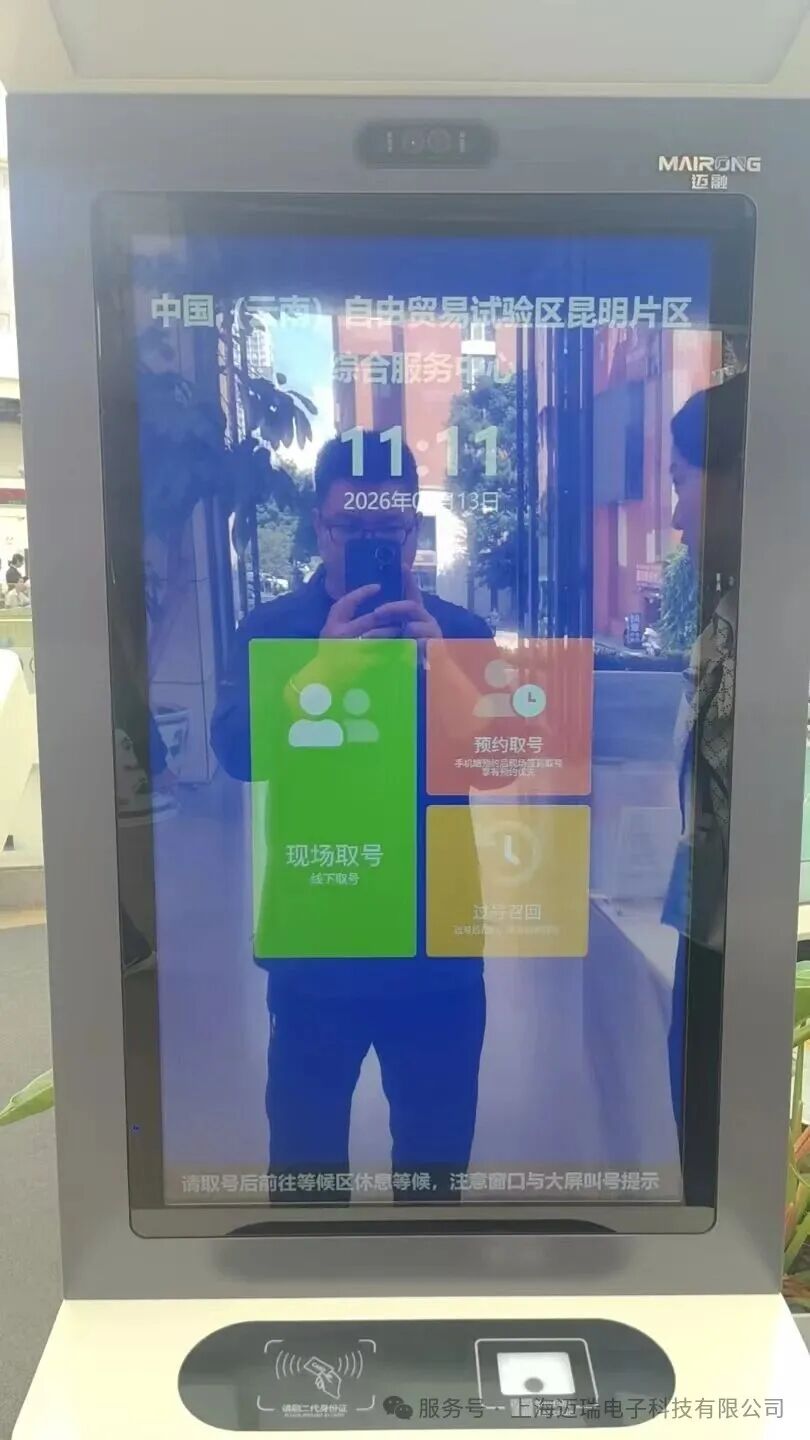
Self-service Ticketing + Online Appointment: Multi-channel Access to Diverse Needs
On-site Ticketing: Flexible and Convenient, Three Methods to Choose From
The public can complete appointment-based or on-site ticketing through three methods: card swipe, credential entry, or QR code scanning. Those who miss their number can recall it with one click at the ticket machine and rejoin the queue for processing, avoiding the need to start over due to a missed number and making the process more composed.
Online Appointment: Services at Your Fingertips, Time in Your Hands
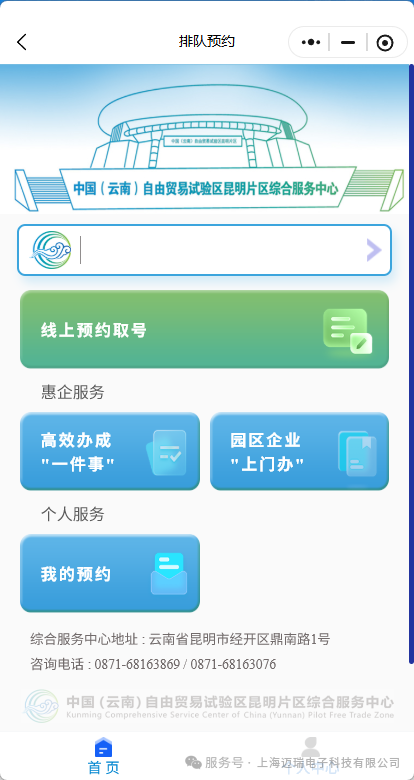
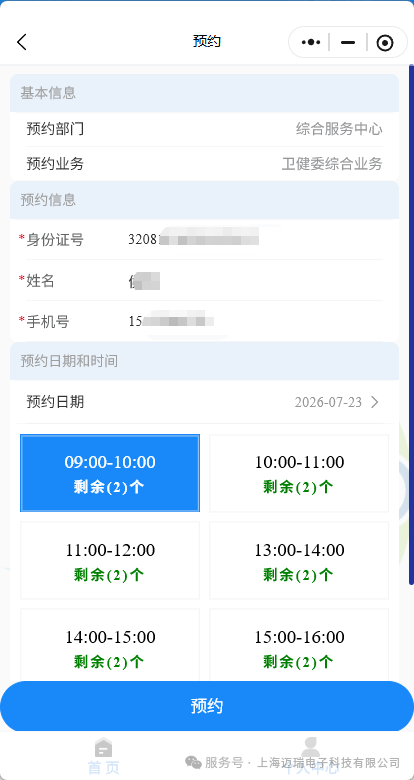
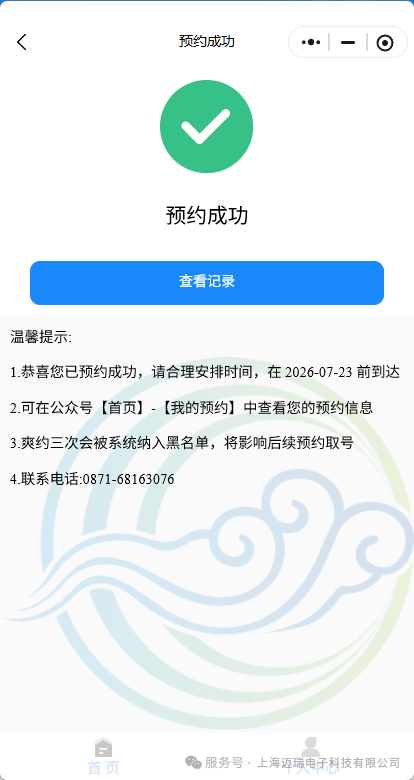
Online appointment services are provided via WeChat mini-program. The public can select individual services by department through the appointment ticketing entry, or handle integrated multi-department matters through the efficient “One Thing” integrated service. A “door-to-door service” channel is available for enterprises in the park: enterprises submit requests online, staff follow up by phone within one working day for guidance, and visit on site within three working days—truly achieving “zero trips for enterprises.” The system also supports applicants in completing appointment check-in and appointment cancellation online, allowing flexible scheduling.
Integrated “One Thing” Multi-matter Processing: One Appointment, Multiple Matters Handled Together
The mini-program integrates online appointment services for efficient “One Thing” processing across multiple departments. The public no longer needs to select services department by department; they can directly select thematic integrated multi-matter items. One appointment completes the application preparation for multiple services, effectively reducing repeated submissions and queuing at multiple counters, advancing integrated service processing and continuously improving convenience.
Intelligent Ticket Allocation Strategy: Flexible Switching Between Daily and Special Scenarios
The system supports time-slot-based online ticket allocation configuration, allowing administrators to preset daily ticket volumes by time slot. It also provides independent special-date allocation strategies, which take precedence over regular schemes. For example, if the regular Monday baseline allocation is 50 tickets and the daily limit needs to be temporarily adjusted to 100, a special-date configuration can be added to take effect independently without modifying the original daily allocation rules, ensuring the baseline scheme remains unaffected. This design accommodates both routine management and temporary adjustment needs, making ticket allocation more scientific and reasonable.
Online Announcement Management: Information Reaches People One Step Ahead
The system supports online announcement publishing and management through the backend. Administrators can edit and publish announcements on the management side, flexibly controlling their display on the WeChat mini-program frontend. Whether it is a temporary hall adjustment notice, a change in required documents for a service item, or the latest policy interpretation, all can be precisely pushed to the public at the first opportunity, allowing applicants to learn about relevant changes in advance during the appointment stage and effectively reducing service obstacles caused by information asymmetry.
Technology Empowers, Services Upgrade
The development of the smart queue management system is not merely an iteration of technical tools, but an upgrade of the government service philosophy. From “people running errands” to “data running the errands,” from “queuing and waiting” to “cloud-based appointment,” from “visiting multiple departments” to “One Thing handled in one visit,” every detail optimization is making government services warmer and faster.